
Liz Bentley: The Punk Psychotherapist on Trauma, Creativity & The Suicidal Therapist
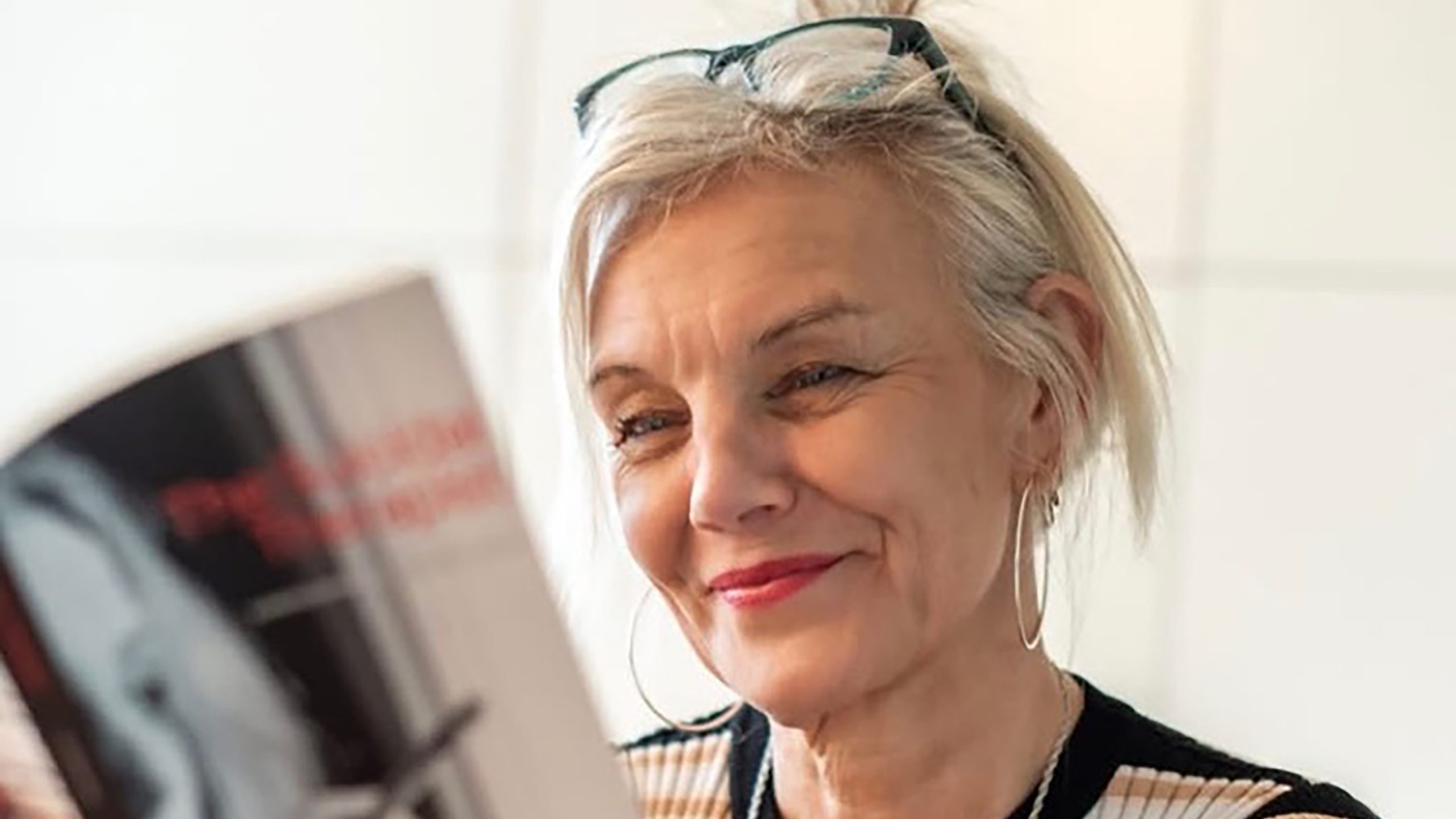
Image Credit: Photo of Liz Bentley.
For some people, creativity is a career. For Liz Bentley, it’s been a lifeline. After seeking therapy in her early twenties, Liz spent years training as a psychotherapist, while gradually discovering another calling through acting, writing and performance classes at Morley College. Inspired by the wonderfully unclassifiable spirit of cult poet and musician Ivor Cutler, she found the confidence to embrace her own wonderfully quirky voice – one that has since taken her from spoken-word stages and comedy clubs to poetry festivals, cabaret nights and now, the page.
We’re catching up with Liz to celebrate the publication of her remarkable memoir, The Suicidal Therapist: Confessions Of A Wounded Healer. Equal parts brutally honest, laugh-out-loud funny and quietly life-affirming, it’s a book that pulls back the curtain on therapy while embracing life’s contradictions – trauma and joy, heartbreak and humour, vulnerability and resilience. Above all, it’s a reminder that hope has an uncanny knack for finding us, even in our darkest moments.
Liz’s outlook feels especially resonant today. She champions curiosity over certainty, listening over judgement, and carries a wonderfully punk belief that laughter, honesty and independent thinking can sit alongside compassion. Away from the page, you’ll find her celebrating London’s cultural soul at The Ivy House in Nunhead, reminiscing about wild nights at The Crypt, St Paul’s Church, Deptford, or championing the pioneering social history of The Peckham Pioneer Centre.
So, if you’re looking for a summer read with heart, wit and just the right amount of glorious anarchy, immerse yourself in The Suicidal Therapist. Then go and discover the remarkable woman behind it.
Looking back to your childhood and teenage years in Essex, what were the earliest moments that opened you up to creativity?
I was in my early 30’s when my therapist suggested Morley College. I began acting and writing classes there. Before then I wasn’t aware how important creativity was to me. I was pretty numb, emotionally. MS mimicked this. Probably the late great Ivor Cutler inspired me the most. He was 34 when he began performing, so I thought ‘if he can start late, so can I’. I didn’t feel I fitted into to any particular genre. Ivor ticked those boxes that didn’t exist. I was introduced to his work by my friend Tog who ran Gumbi records in Whitechapel where I worked. Before then I had played keyboards in bands but struggled to improvise because I didn’t think I was any good, despite getting a grade six in piano. I just didn’t have the confidence. It was therapy that freed me up to be creative and do my own unique quirky stuff. The The, ‘This is the Day’ is one of my all time favourite songs, again I loved the band in the 80’s but it wasn’t until I was 30 that I recognised the power of these lyrics.
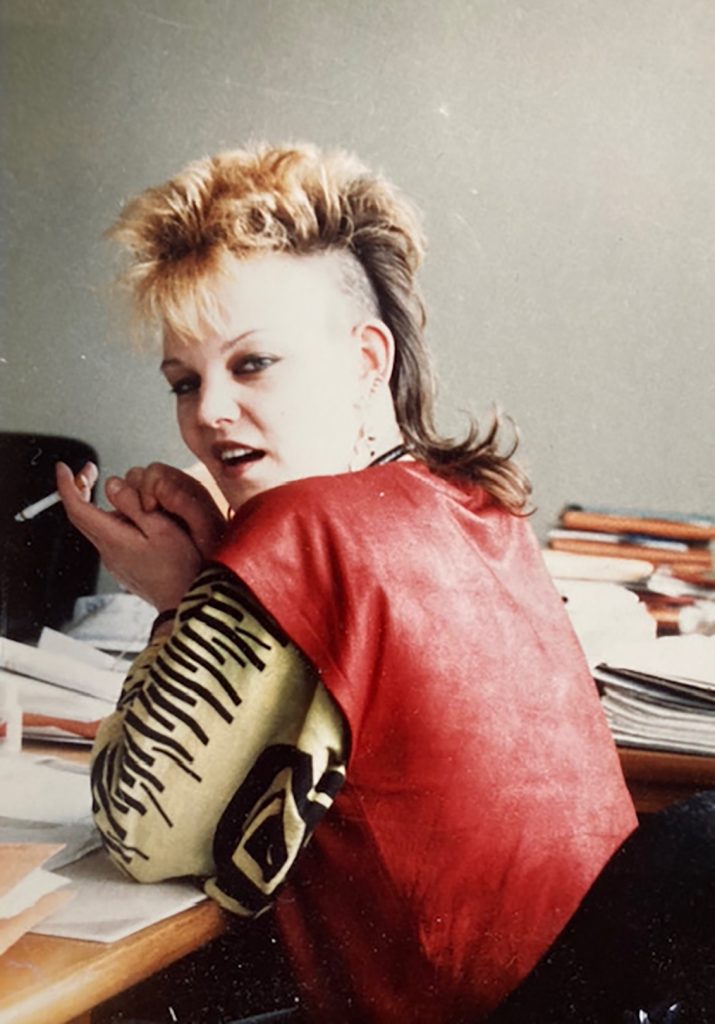
Image Credit: Photo of Liz Bentley.
Your memoir, The Suicidal Therapist: Confessions Of A Wounded Healer, is deeply honest about the complexities of being human. Without giving away too many spoilers, what do you hope readers will take from the book? And after spending decades as both therapist and client, are you more optimistic about people’s capacity to heal than when you first started out?
I’ve always had hope working as a therapist. We all need hope, especially now. I’ve witnessed so many turn arounds in mental health, including myself. You can feel suicidal one day, then things change, hopelessness passes and a sense of joy can return in the most unexpected of places.
I was deeply inspired by Viktor Frankl, ‘Man’s search for Meaning‘, and ‘The Choice‘, by Edith Eger.
When I worked in the NHS I remember working with a patient, us both feeling hopeless, I asked my supervisor ‘How on earth can I help them?’ He said ‘if they are alive, still breathing, then you can help by just being there’. I’ve never forgotten that. Listening is key.
If we are listened to then we are alive. I hope readers of my book will connect, find emotional depth and hilarity with serious issues. I hope they will appreciate my honesty. I hope my book will eradicate the shame that comes with childhood trauma and all the symptoms that can arise from it. In my case, promiscuity, bulimia, self sabotage, disability, addiction.
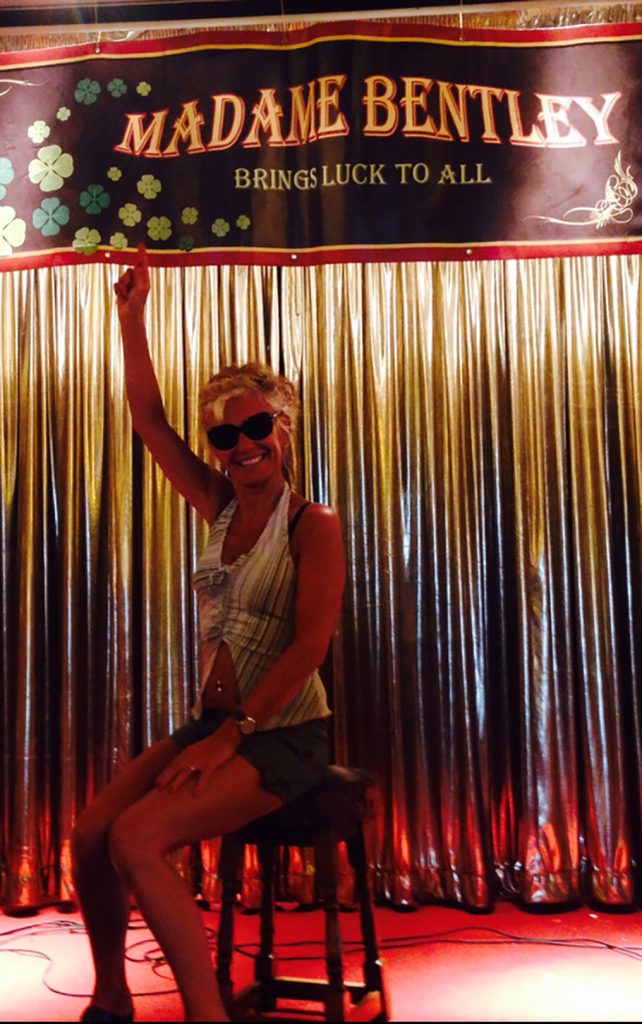
Image Credit: Photo of Liz Bentley.
Throughout your career you’ve worn many hats – psychotherapist, poet, performer, comedian and musician. Do you see a common thread running through all of those identities? And is there something inherently punk about refusing to stay in a single lane and instead following your curiosity wherever it leads?
Absolutely, I’m inherently punk and still struggle to fit in, but I have to, to some degree.
This is where comedy and creativity comes into play. Life is ludicrous. Box ticking is ludicrous. (Don’t get me started on CBT, I toured a show on that, Cock and Ball Torture). Politics is Vaudeville and war is the shadow side of the human condition. I love my black cat, but he kills mice and sometimes birds. Even with a bell. Black humour was an essential psychological tool for front-line soldiers in WW1.
Listening therapy is the deep layered understanding of the infant/child learned defence, humour is the ‘mature’ defence mechanism laid bare. Making sense of humour – and then seeing the funny side. Being punk involves laughing at yourself. I am an independent thinker, and that thread travels through all my identities. I love being a therapist, and I love being a writer and performer equally. I can’t imagine retiring as a therapist, not unless I get dementia and start forgetting client’s names. It is a truly rewarding job. I love my clients. Punk is LOVE.
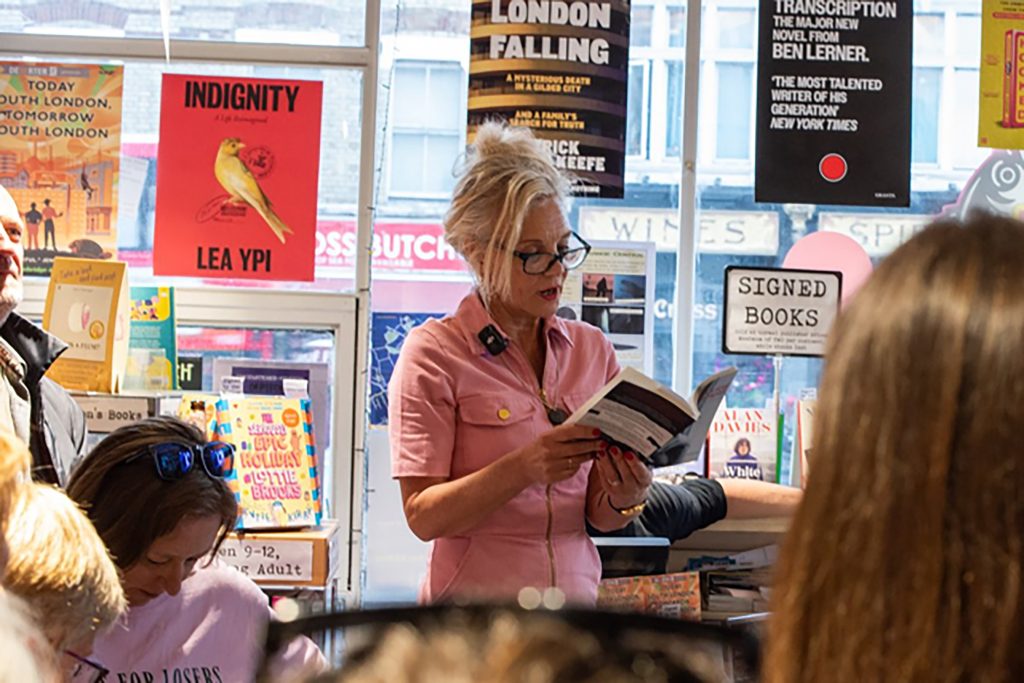
Image Credit: Photo of Liz Bentley. Photographed at the book launch, 2026.
The book has been published by Survivors Voices Press, a survivor-led independent publisher amplifying voices that don’t always find a place in the mainstream. What has that partnership meant to you, and how important do you think independent publishers are in today’s literary landscape?
It took me four years to get published. The first publisher went bust, the story is too long to tell here. A friend of my supervisor worked for Survivors Voices and told me they were starting up a new press. I checked out their history to discover twenty five years of solid and groundbreaking work and support to thousands of abuse survivors. I am the third book they have published. There is a massive gap between mainstream and independent publishers.
It is complicated and ‘Independent’ anything is always tricky, hard work and usually requires many, many unpaid hours. I am thrilled that the charity have published me. It is befitting for so many reasons. We are building a truly trusting and important relationship.
I will be facilitating one of their writing groups later this year. I am very excited that the work with them won’t just end with my book.
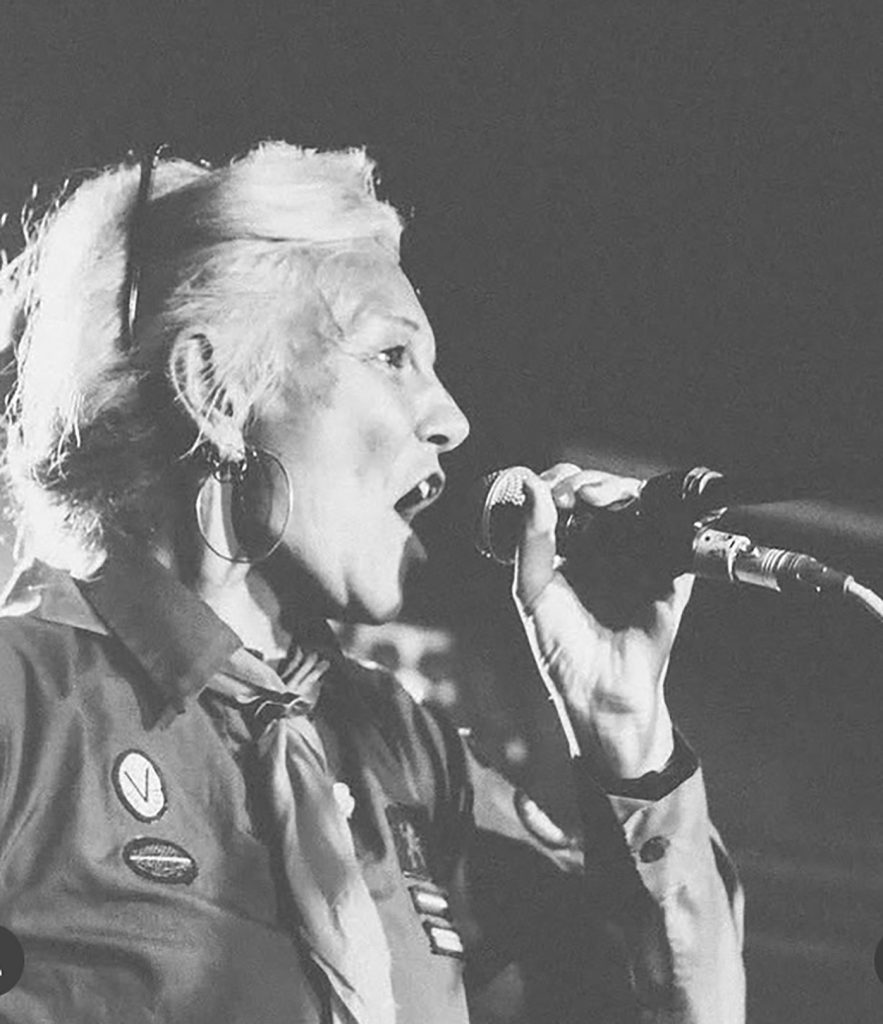
Image Credit: Photo of Liz Bentley. Photographed singing with Pig City Committee (her son, Oli’s band).
Looking ahead, if we were sitting down together five years from now, what would you like the next chapter of the Liz Bentley story to include? More books? More performances? A punk psychotherapist world tour? Or perhaps something completely unexpected that hasn’t revealed itself yet?
Probably the latter. I never plan much creatively. Having had MS for nearly 40 years, and with arts and disability funding and assistance cut, it becomes harder for me to travel. There may be another poetry book with my other publisher (waiting arts council!) and I’m working on a novel. Could there be a sequel to The Suicidal Therapist? ‘The Punk Psychotherapist’, now that is a good idea dear Jamie [Run Riot Editor].
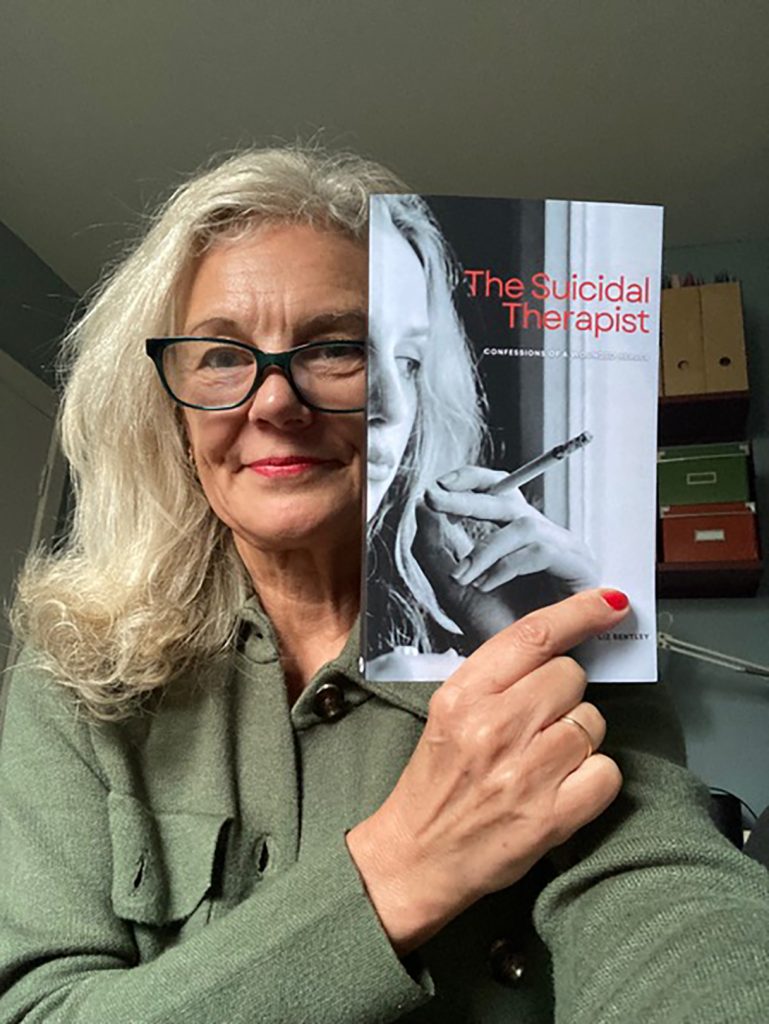
Image Credit: Photo of Liz Bentley.
London has played a significant role in your journey. Could you recommend three of your favourite cultural places and/or communities in the city, and tell us what makes them special to you?
The Ivy House, Nunhead has to be top of that list. It is the first ever community run pub in London and was saved from property development. I performed there over thirty years ago at Hugh Metcalf’s Klinker Club, and I continue to perform there. Check out Free University of Glastonbury on 27th June. I sometimes play Casio keyboards in my son Oli’s band ‘Pig City Committee’. We have headlined at The Ivy House. Rupert and I had our wedding reception there, and my 50th birthday party. Hugo, the father of my kids also got married there and we have just celebrated his wife’s 60th birthday there too. (We are the complete blended family, all our ex’s and partners get on, we have xmas together with all the kids which usually involves a drink at the Ivy House. Oli DJ’s there on NYE. Great place to watch the world cup too!
The Crypt, St Paul’s Church Deptford. Whilst no longer a psychedelic/rock/punk club, I still admire the beauty of the one of the finest 18th century Baroque masterpieces. The Crypt represents a particularly fun and wild time of my life in the 80’s that I enjoyed with my friend Marni. We used to travel from Rayleigh Essex for the Friday club night and not return to Essex until Sunday night. Always finding a man, or a band, or a man in a band, who would put us up/ put up with us. One of the bands I played keyboards with, Purple People Eaters, played there a few times. Then I got MS symptoms in my hands and had to stop playing, the band folded anyway. My body has its unique way of saying STOP. Sort your life out! Or bloody calm down and rest, it literally tells me I’m exhausting it.
The Peckham Pioneer Centre, home to The Peckham Experiment. Way, way ahead of its time, studying health rather than disease. Celebrating its 100th birthday this year and part of the London Open House Festival. If you’re interested in 1930’s architecture and health before the NHS it’s one to see and experience and learn about city community living. It absolutely marked the beginnings of social prescribing. Finally, in 2020, ‘social prescribers‘ were introduced directly into Southwark GP surgery’s. Onwards and upwards. Everything takes time.
Find Liz Bentley at lizbentley.co.uk and on Insta @msliz.bentley @liz_thesuicidaltherapist
The Suicidal Therapist is published by survivorsvoices.org @survivors_voices
Available in all good bookshops → bookshop.org
