

Venus Raven and Tainted Saint on the London Fetish Film Festival: “strange and magnificent!”
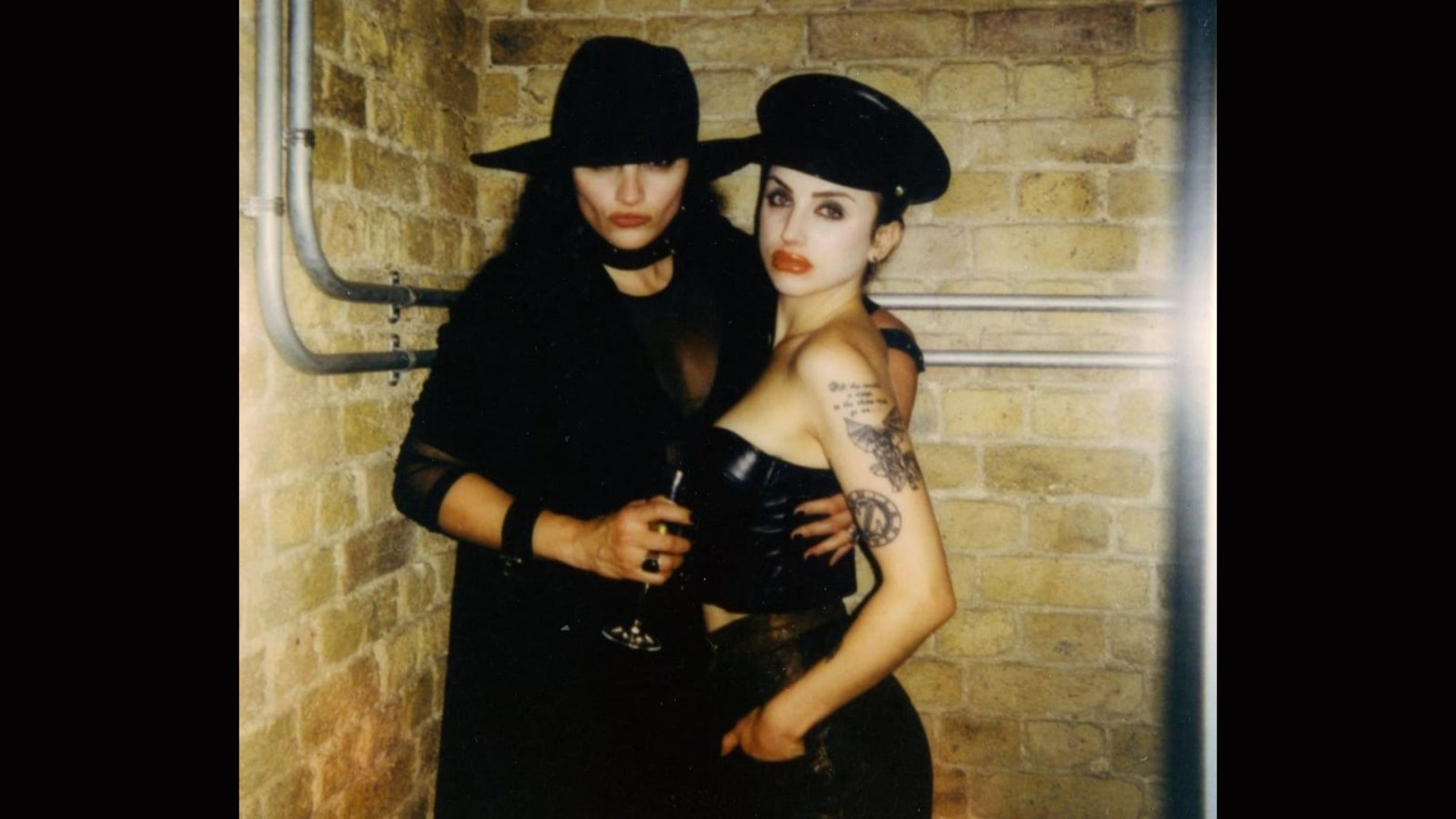
Image Credit: Photograph of London Fetish Film Festival Directors, Venus Raven (left) and Tainted Saint (right), taken by Caroline Bonarde.
Fetish culture has long shaped contemporary art, fashion, popular culture and cinema – from underground performance and body art to the visual language of music, film and club culture. At its best, fetish offers a way of understanding desire not as spectacle, but as imagination: a space where fantasy, identity, power and intimacy are negotiated, projected and reclaimed. In a society still wrestling with repression and shame, fetish cinema has become an unexpectedly rich mirror of who we are, what we hide, and what we long for.
Founded in 2016 and now in its seventh edition, the London Fetish Film Festival returns from 19–22 February with a brazen programme of 45 films, screening at the beautifully intimate The Arzner LGBTQIA+ Cinema in Bermondsey. Across features, shorts and documentaries, the festival moves from the provocative politics of The Visitor (Dir. Bruce La Bruce) and the raw tenderness of Pillion (Dir. Harry Lighton), to archival reflections in A Body To Live In (Dir. Angelo Madsen Minax), alongside boundary-pushing short-form work that unzips kink, fetish, BDSM, desire, psychology, and sexual liberation.
Welcoming the curious novice as warmly as the seasoned fetish puppy, LFFF offers a rare chance to encounter fetish as lived culture – in a venue with a capacity of just 50 seats, you’ll want to book quick to be part of something “strange and magnificent!” All events are, naturally, strictly 18+.
In this interview, we speak with festival Directors Venus Raven and Tainted Saint – the artists, curators and community-builders behind one of London’s most distinctive film festivals.
Your work consistently frames fetish as something emotional, political and deeply human. Can you take us back to your own origin point – that first moment where fetish became a language you wanted to build a world around?
Fetish didn’t arrive just as a sudden revelation, but through quiet recognitions where desire, identity and imagination aligned. Understanding early on that it wasn’t just about arousal, but ritual, vulnerability and care.
Cinema played a crucial role in that realisation. Seeing bodies and fixations framed with tenderness or complexity – rather than shame or spectacle – unlocked something. It made clear that fetish could hold narrative, politics, memory, humour and grief all at once. LFFF was born from that understanding: a desire to create a space where these languages could be spoken fluently, without translation or apology.
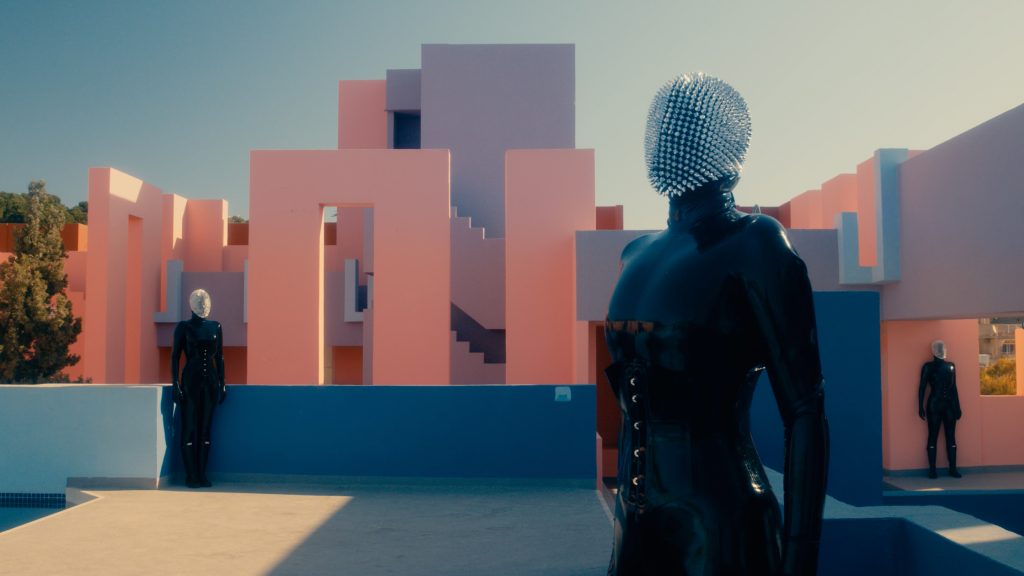
Image Credit: Still from ‘HYPERION‘ by Blood Shrimp & Gagger. Screened as part of LFFF: Shorts Session 2, Saturday 21st February at 6:30pm.
LFFF is proudly female-led, which still feels radical within fetish and film cultures. How does that leadership lens shape the atmosphere and ethics of the festival – and what values do you prioritise when nurturing this community?
Being female-led isn’t about replacing one dominant gaze with another – it’s about dismantling the idea that desire must be gendered or organised hierarchically at all. We’re conscious of how easily conversations around leadership slip into binary thinking, and LFFF actively resists that.
That lens shapes everything – from how films are selected, to how audiences are welcomed, to how discussions are held. We consciously push back against the toxic stereotyping surrounding our community and the creative medium of cinema in a world where the film industry, unfortunately, still has a not-very-radical cis-hetero-white-male gaze dominating it. The way we work and our priorities should now be radical, it should just be. Centring autonomy and human connection over consumption. Fetish, for us, is not about ownership or objectification, it’s about agency, consent and open communication.
How does LFFF support its community beyond visibility – particularly around care and consent?
Visibility without care is hollow. At LFFF, we prioritise long-term relationships with filmmakers and artists – we know how they work and how they hold consent, and that trust matters. We actively promote a consent-based culture – not just on screen, but in how audiences engage with one another, how talks are run, how we collaborate. Care is embedded structurally, not added as an afterthought.

Image Credit: Still from ‘PILLION‘ by Harry Lighton. Screened as part of LFFF: Pillion Fetish-Friendly Fundraiser Q&A. Thursday 19 February at 7pm.
Would you consider LFFF an antidote to repressed desire – and if so, what kind of antidote are you trying to offer?
Yes – but not a cure in the clinical sense. More of an invitation. LFFF offers permission: to look, to feel, to recognise yourself reflected back without judgement. It normalises play, curiosity and erotic imagination, whether that leads someone deeper into fetish or sets alight a completely new spark!
For some, it’s an inspiration to experiment at home. For others, it’s reassurance for their fixations. The antidote is visibility without pressure – a space where desire can exist without needing to justify itself.
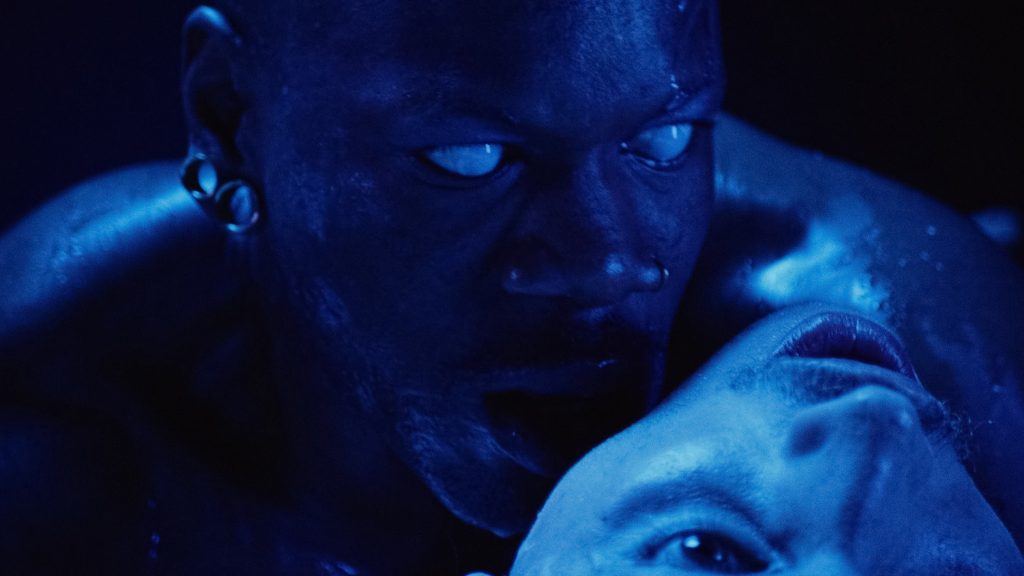
Image Credit: Still from ‘THE VISITOR‘ by Bruce La Bruce. Screened as part of LFFF: The Visitor Q&A & After Party. Friday 20th February, 6:30pm.
This year’s programme includes films like The Visitor, Pillion, and A Body to Live In. What drew you to these works, and how do they reflect different facets of fetish?
Each of these films approaches fetish from a distinct emotional and historical angle. The Visitor explores a more contemporary political dimension in its highly symbolic narrative. Pillion is raw, funny and unflinching in its portrayal of dependency, devotion and control. A Body to Live In anchors BDSM within lineage – tracing its evolution as both personal practice and political resistance.
Together, they demonstrate that fetish isn’t a monolith. It can be tender, archival, brutal, playful, transformative. What connects them is their refusal to flatten desire into spectacle – each film allows experiences to remain complex and human.
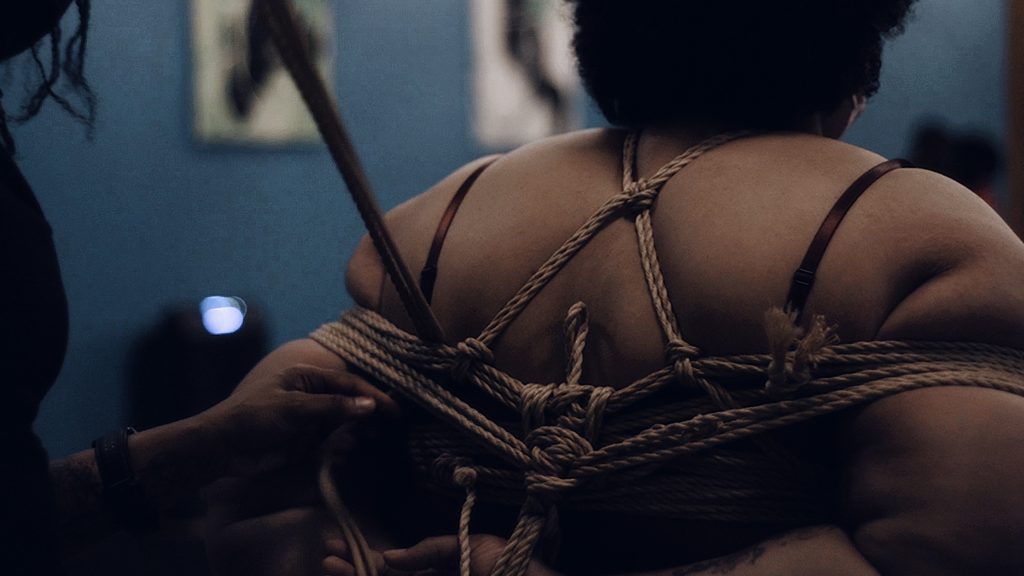
Image Credit: Still from KINKY AND LOVING IT by David Weathersby. Screened as part of LFFF: Documentaries. Sunday 22nd February, 2:30pm.
What advice would you give first-time attendees approaching fetish cinema with curiosity? And what do you hope seasoned community members still find or are challenged by?
For newcomers: arrive open, not expectant. You don’t need to understand everything or feel everything. Let the work meet you where you are, and trust your boundaries.
Check in with yourself. Notice your reactions. Feel around your boundaries and sharpen your awareness. And remember, you’re allowed to sit. Literally… You can just simply sit down in the cinema and enjoy!
For those already embedded in fetish culture, we hope the festival still surprises you. That it disrupts comfort zones pleasingly, and offers new aesthetics or histories you may not have encountered.
LFFF offers something rare: pause. Reflection. A chance to see fetish contextualised, historicised and discussed – not just (re)enacted.
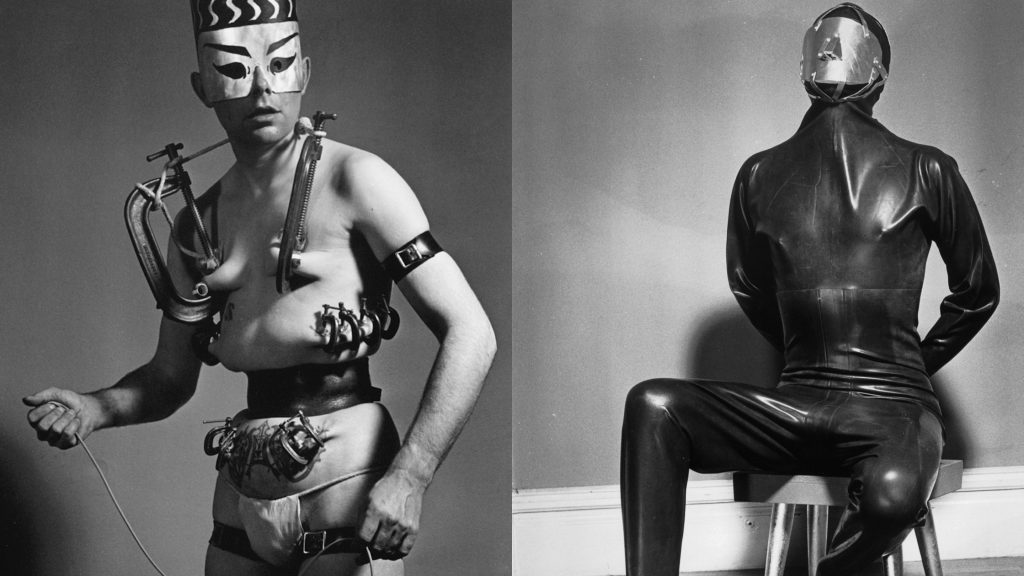
Image Credit: Stills from A BODY TO LIVE IN from Fakir Musafar’s Archive. Screened as part of LFFF: A Body to Live In + Short Films. Sunday 22nd February, 6:30pm.
What excites you most about curating shorts and documentaries?
Short-form work is where creative and narrative risk lives. It allows for experimentation without broader compromise. Documentaries, in particular, provide vital clarification. They strip away myth and make lived-experience visible, accessible and approachable.
They remind audiences that fetish isn’t abstract – it’s practiced by real people, with real bodies and real imaginations which are strange and magnificent!

Image Credit: Still from ‘BLOOD‘ by Bloodshrimp and Gagger. Screened as part of LFFF: Shorts Session 2. Saturday 21st February, 6:30pm.
Why is cinema such a potent medium for exploring desire?
Cinema accesses fantasy safely. You can recognise yourself without being exposed. That distance is powerful. One could call it an educated dance between exhibitionism and voyeurism, letting people project fantasies, confront curiosities, or simply sit with sensation.
Film engages the imagination in ways everyday life often can’t – especially when desire is policed or repressed.
Which London venues, communities or grassroots scenes feel like your cultural home?
Elektrowerkz remains foundational – a space where fetish, music and queer subculture collide for events such as Torture Garden, Slimelight, Monsterqueen, exhibitions and markets. Future Ritual has been vital for its commitment to intentional gathering and its nurturing of performance art. And while Ugly Duck has closed down, its legacy – experimental, interdisciplinary, defiant – still informs how we imagine space and what artistic community can be.
Venus Raven and Tainted Saint are the Directors of the London Fetish Film Festival. Find Venus Raven @venusraven1 and Tainted Saint @taintedsaint6
London Fetish Film Festival
19th – 22nd February 2026
The Arzner LGBTQIA+ Cinema
10 Bermondsey Square
London SE1 3UN
Book tickets via thearzner.com
All events strictly 18+
Find all details about LFFF via linktr.ee/londonfetishfilmfestival and @londonfetishfilmfestival_
Image Credit: Artwork for London Fetish Film Festival