

Joe Corré: Building London’s Creative Future
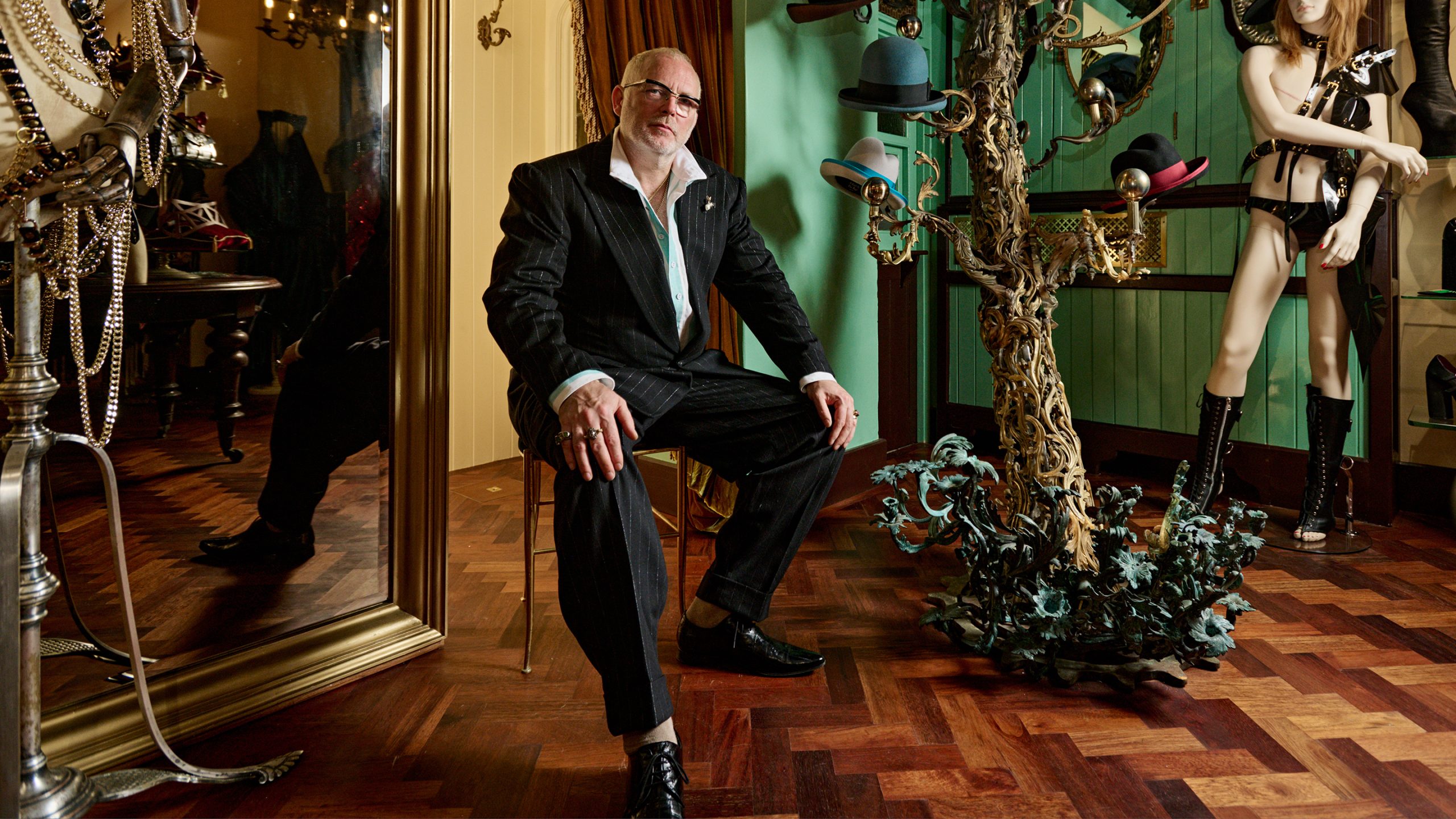
Image Credit: Portrait shot of Joe at Light House, photographed by Ki Price.
The first thing you notice about Joe Corré isn’t rebellion. It’s generosity.
Not generosity in the conventional sense, but in the way he speaks about ideas, craftsmanship and the importance of creating spaces where other people can flourish. Spend a little time with him and you quickly realise that, despite growing up at the centre of one of Britain’s most influential creative families, he isn’t particularly interested in mythology. For Joe, culture has never been something to admire from afar. It’s something you build together.
That was simply the world he inherited. While most children discover creativity through school or television, Joe’s childhood unfolded inside the orbit of Vivienne Westwood and Malcolm McLaren, where the World’s End shop was less a boutique than a meeting place for artists, musicians, designers and outsiders. New ideas were exchanged face to face. Communities formed around physical places. Culture wasn’t consumed; it was made. As Joe reflects in this interview, those environments became catalysts for entirely new ways of thinking – something he believes London is in danger of losing today.
Nearly a year after opening Light House in the heart of Soho, Joe is building an answer. Part members’ club, part showroom, part cultural salon, Light House feels less like a retail destination than a living ecosystem for independent creativity. Beyond the public retail showrooms there are appointment-only doors, where around twenty designers and artisan makers share space, conversation and ideas. Among them are Run Riot favourites Atsuko Kudo and Torture Garden Latex, alongside Joe’s own label, A Child of Jago. But there’s more. Behind discreet doors you’ll discover the members club where the programme spills into candlelit evenings, artist salons, exhibitions and conversations – from Katharine Hamnett’s recent appearance to Salon Bizarre with Swannee Vranckx this August, followed by Le Pustra’s intoxicating celebration of Weimar decadence later in the month. Much of it travels by whispered recommendation. Membership simply brings you closer to the conversation.
That belief in community runs through everything Joe does. Through The Vivienne Foundation he continues Vivienne Westwood’s uncompromising commitment to climate action, human rights and peace, while supporting organisations ranging from Belarus Free Theatre to refugee, environmental and grassroots campaigns. He argues passionately that London’s creative future depends on supporting independent makers, reclaiming underused spaces and rebuilding stronger cultural ties with Europe – because ideas, like artists themselves, thrive when they’re free to move.
Perhaps that’s why Light House already feels important. In an age that has been shaped by algorithms and isolation, Joe has chosen to invest in something refreshingly analogue: a room full of curious people. A place where conversations begin, collaborations emerge and culture is experienced rather than consumed.
His three favourite places in London tell a similar story. The Wallace Collection rewards slow looking. The Frontline Club reminds us why journalism and debate matter. The Southbank Cultural Quarter remains one of the capital’s great democratic meeting places for art, music and ideas. None are simply destinations; each invites participation.
If Joe’s interview leaves us with one thought, it’s this: the future of culture won’t be built by bumming around and doom-scrolling at home. It’ll be built by getting out and about and showing up. Visit an independent exhibition. Buy directly from a maker. Go to an artist talk. Support a charity doing difficult work. Wander somewhere you’ve never been before. And if you happen to hear whispers of something happening at Light House… follow them. The most interesting ideas in London still tend to travel by word of mouth.
You grew up in an extraordinary creative household, and today you’re watching another generation – through your daughter Cora and the creatives gathering around Light House – find their own voice. Looking back, what do you think is inherited, and what comes from the environments we create for one another? How has your understanding of family and creative community changed over time?
Looking back at my parents and their generation, I think physical spaces, whether they were shops, markets, clubs, universities, were designed and used to expose new ideas, and many of them became a catalyst to develop those ideas into a cultural shift. Certainly, the Worlds End shop was one of those and that influenced my pathway in life. That personal connection and face to face experience of exchanging ideas, has shifted dramatically with the impersonal experience of social media, which can be quite isolating. Physical spaces for creatives have also become impossibly expensive so it’s also really challenging to do anything experimental.
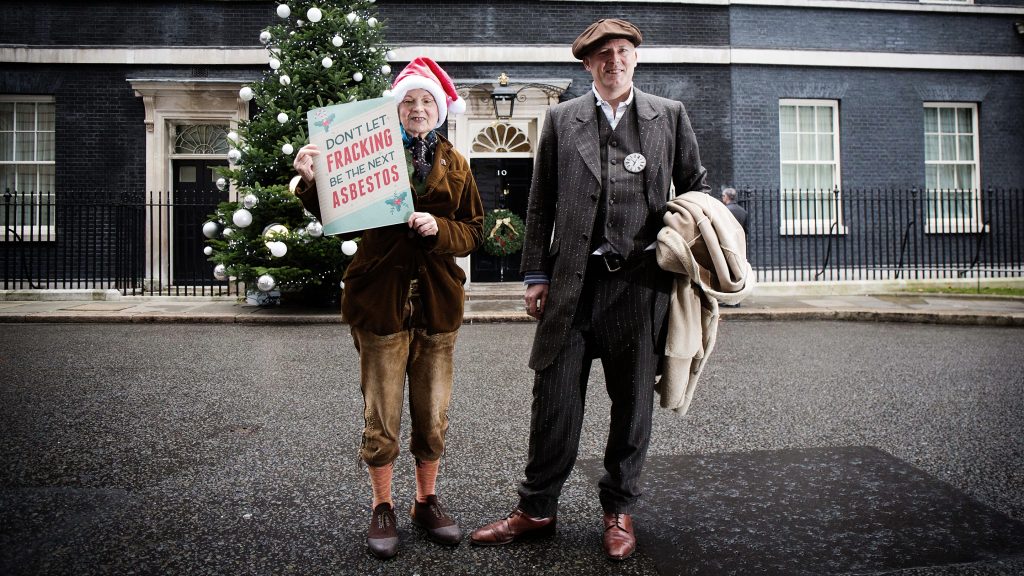
Image Credit: Joe and Vivienne on a fracking campaign at Downing Street, 18 December, 2014. Photographed by Ki Price.
Light House feels less like a shop and more like a vibrant experiment in how a city might support independent creativity. If London is to remain one of the world’s great cultural capitals, what kinds of spaces – and what kinds of people – do we need to invest in now?
There are so many empty or underused properties that could be used for all types of cultural and creative ideas. The financial bubble has burst in London, leaving a glut of properties which no longer qualify for the investment that created them. Affordable housing is non-existent. All of this is solvable with creative thinking and that is what we need to invest in.
Film credit: Photo stills by Ki Price with Joe introducing the becoming of Light House.
Punk challenged authority by refusing permission. Noblesse oblige suggests that privilege carries responsibility. Your work today seems to draw on both ideas. Has your understanding of rebellion evolved from simply resisting the system to feeling a responsibility to build something better?
Rebellion against something without offering a better alternative is pointless, boring and stagnant. This is what happened to Punk in the late 70’s, early 80’s and why we thought it was a failure in our household, giving rise to a feeling of “Don’t mention the war”. However, despite all of that it really did give so many people the confidence to choose a more creative path in life which has benefited everyone in so many incalculable ways. So, from that point of view, it was a resounding success.
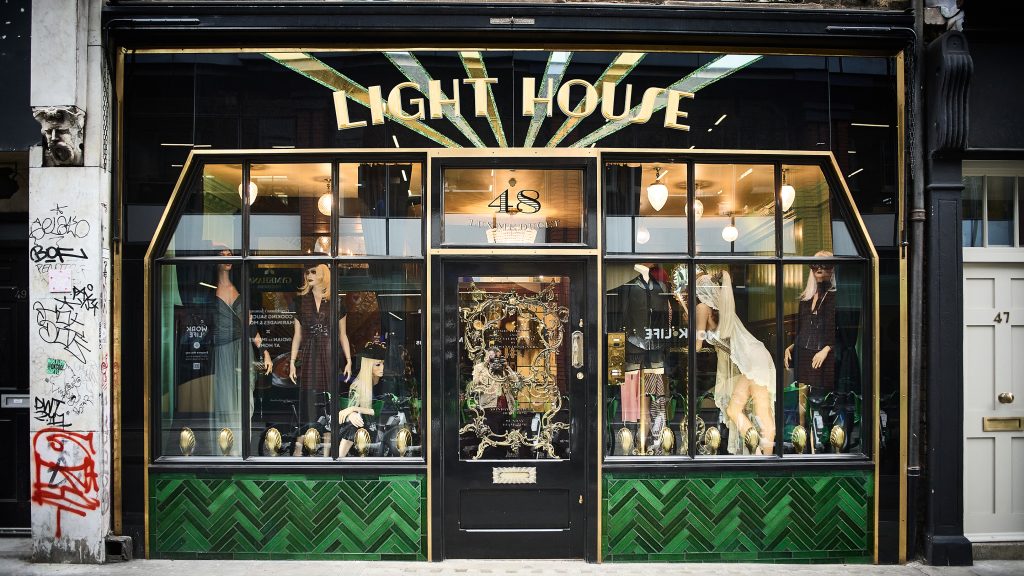
Image Credit: Light House on 48 Berwick St, Soho, London W1F 8JD. Photographed by Ki Price.
Through your support of Belarus Free Theatre, alongside your work on climate and independent creativity, you’ve been close to artists working on the front line of political and social change. What have they taught you about the role of culture when democracy, truth and community come under pressure?
Creativity and art is always the solution to challenging the status quo or the political dogma and impasse.
At Run Riot we often say that artists don’t just reflect society – they help us imagine what comes next. Which storytellers, makers or movements do you think are helping us visualise a more hopeful future right now, and why do they matter?
I think there is definitely a movement towards real experience over digital. I am also encouraged by the amount of younger people getting involved in making things; clothes, music, knitting, writing etc. Perhaps the biggest movement though is towards growing your own food, which I think is great.
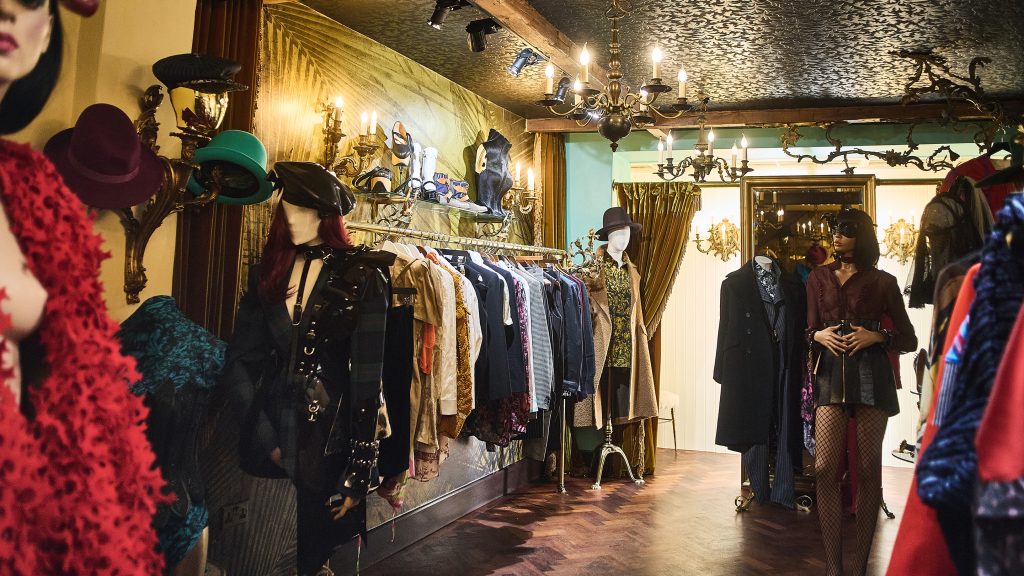
Image Credit: The show rooms at Light House. Photographed by Ki Price.
London has never been short of talent, but many independent artists, venues and organisations are under extraordinary pressure. If you could change one thing tomorrow to help London’s creative ecosystem thrive, what would it be – and what role can independent communities play before governments catch up?
I don’t think there is just one thing that needs changing but a few things could make a huge difference:
~ Break up the monopolies, it cannot be right for one or two landlords to own practically the whole of Soho, for example. How can you get a fair deal in that scenario?
~ Make the chain stores like Costa, Pret A Manger, Primark, Tesco pay double or triple the Business Rates and make it cheaper for independents.
~ Deal with the problem of empty properties with creative solutions.
~ Realign the UK with Europe.
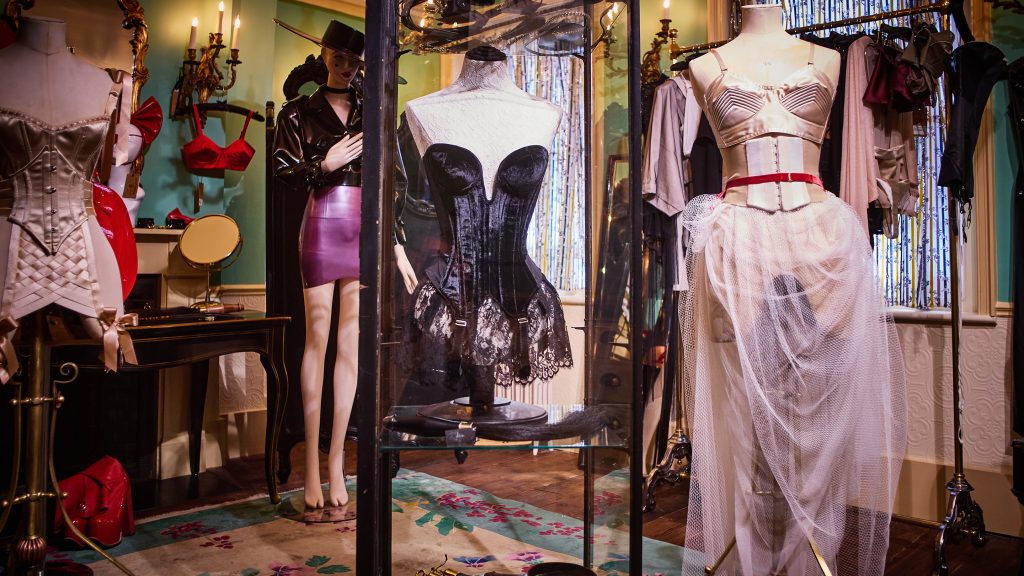
Image Credit: The show rooms at Light House. Photographed by Ki Price.
Run Riot is built around exploring London through the people shaping it. Could you recommend three cultural places in London that you love today – whether they’re galleries, cafés, theatres, workshops, parks or somewhere entirely unexpected – and tell us what makes each one special?
Frontline Club – Tucked away in Paddington, created by and for journalists who have been to, and reported from, some of the most dangerous war zones and disasters. They have always got interesting talks and programmes, and a bar where you can find yourself participating in extraordinary conversations.
The Wallace Collection – This was one of my mother’s favourite places because of its fabulous collections of art, ceramics, furniture and armour. You can always find something interesting that you haven’t noticed before.
The Southbank Cultural Quarter – Has always got something interesting to engage with and you can walk from there along the riverside to the Tate and beyond.
I also like some of London’s cemeteries, but that’s another story….
If someone walks into Light House in five years’ time, what do you hope they’ll discover about London that perhaps feels difficult to imagine today?
I hope that Light House becomes a model that is replicated around the UK and the wider world. A place to showcase the best products made by artisans, designers and artists. A magnet for creative people and a catalyst for advancing cultural ideas.
Find Joe Corré at Light House, Soho.
Light House
48 Berwick Street,
Soho, London W1F 8JD
lighthousesoho.com
Instagram: @lighthouse_soho
Enquire about Light House membership → lighthousesoho.com
