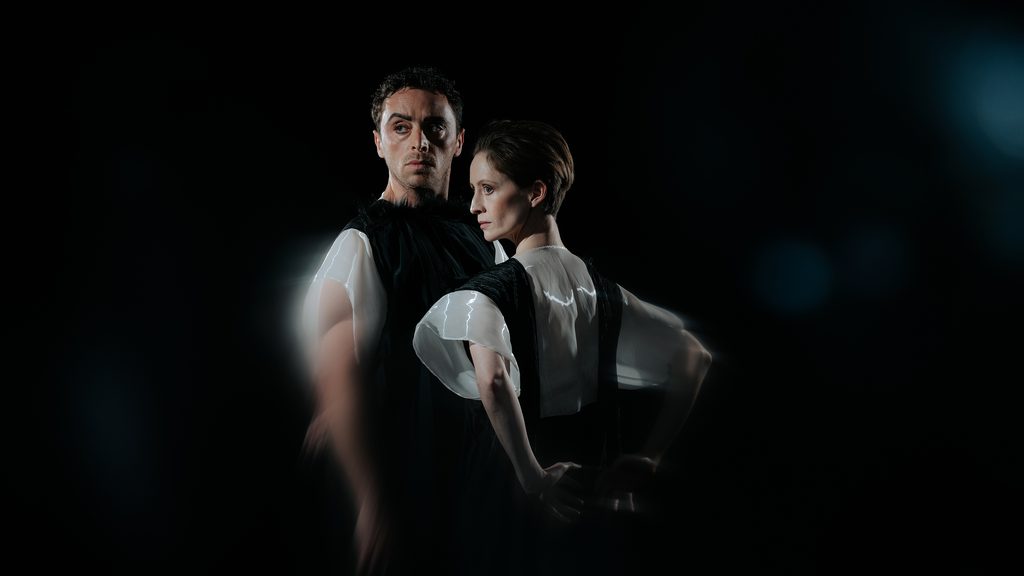
Anthea Lewis on Touch The Floor: Where Memory, Music and Movement Meet

Anthea Lewis on Touch The Floor: Where Memory, Music and Movement Meet

Editor / 14 September 2026 / Dance

Image Credit: Photo of Anthea Lewis, Guest Curator at Dance Umbrella 2026.

Anthea Lewis discovered the joy of being seen while dressed head-to-toe in pink, mouse ears on, performing A Windmill in Old Amsterdam. Dance had followed her older sister into childhood ballet classes, but soon became something distinctly her own – a place for expression, curiosity and visibility. From there came professional training, more than two decades spanning performance, choreography, physical theatre, producing, movement direction, teaching and curation, and collaborations with organisations including Tate Modern, the Young Vic and Dance Umbrella.

That gloriously non-linear career now finds a home in Blulilli Projects, Anthea’s creative house for bringing disciplines, people and ideas together. At its heart is a belief in curiosity, underrepresented voices and creating the conditions for exchange – recognising the cultural power people already possess rather than waiting for permission to exercise it.

This autumn, Anthea is Dance Umbrella’s 2026 Guest Curator, presenting Touch The Floor at Rich Mix on Saturday 24 October. Working with Natifah White, Dwayne Church-Simms, Dr Aleema Gray, Stuart Thomas, Lisa Anderson, Cyndi Handson, Spider J, Dean Bryce, Amarnah Ufuoma Cleopatra, Benji Reid and Paradigmz, she turns the venue into part gathering, part living archive and, naturally, dance floor. Through conversation, zine-making, food, music and movement, Black British cultural memory is traced through the places people have gathered, from house parties and community spaces to clubs.

The idea feels particularly potent now: culture isn’t only something institutions preserve for us – it’s something we make and pass between us.

So take Anthea’s lead this week. Dig out an old record, call someone over, cook something, swap stories and move the furniture. You don’t need permission to make a cultural space. Sometimes you just need people, music and somewhere to dance.


Before the professional training, international performing, choreography, producing and curating, there was presumably a young Anthea who simply loved to dance. Where did that begin for you, and what did those early years teach you that still guides how you make your way through the creative world today?

My mum used to say I was my sister’s shadow, so when my sister started ballet classes, naturally I wanted to be part of it too. I remember Miss Well’s house, converted into a studio, being full of cats, which I was allergic to. It was always a little damp and musty, but none of that mattered. I was happily skipping around in a top to toe pink ballet outfit.

My first performance was to ‘A Windmill in Old Amsterdam’. I remember the excitement of putting on the mouse ears my mum had made for me, and I think that was when I discovered something that has stayed with me, the absolute joy of being on stage and feeling happy to be seen. Being comfortable being seen wasn’t always something I experienced in everyday life, so performance became a place where I could express myself and feel visible. There was something powerful about that.

As my sister and I grew up, leaky church halls became part of our Saturday routine as we moved through different schools, learning ballet, tap and jazz. My parents were very supportive of our creative explorations and wanted to keep us active through both sport and the arts. It gradually became clear that my passion and strength were in the performing arts. They also exposed us to an enormous range of culture from a young age. We were taken to see theatre, dance and concerts. I didn’t always understand what I was watching at the time, but looking back, I realise how important that exposure was. It taught me that there were many different ways of making and experiencing art.

My dad was the music man. He was always singing or whistling, playing cassettes and records by The Mighty Grinder, Arrow, Carlene Davis, Nina Simone, Otis Redding, Hot Chocolate, Kate Bush, Tears for Fears and more. That definitely rubbed off on me. We were encouraged to learn classical guitar, saxophone and clarinet, so music was always part of our environment as much as movement was.

I also loved musical films. I would recreate Fame, Calamity Jane, A Chorus Line, Singin’ in the Rain and The Sound of Music, doing my best to reinterpret my favourite characters with whatever I could find in my wardrobe, and occasionally my mum’s. I was particularly fascinated by the films that were about becoming a dancer, the auditions, training, struggle, rehearsals and the desire to make it. Looking back, it feels almost inevitable that I would follow that path.

But those early experiences also taught me things that have stayed with me beyond dance. I learnt that things that initially feel strange or unfamiliar don’t necessarily have to be seen as bad. Boredom can sometimes be a mask for something else going on, but it can also create space for the imagination. I learnt the value of repetition and practice, whether that meant working through a musical scale, repeating a routine I kept getting stuck on, or sitting with a creative block. Most importantly, I learnt that showing up and being present is itself a practice. The outcome won’t always be what you imagined or hoped for, but there is value in being there, paying attention and continuing to explore.

I think that principle still guides how I move through creative life now, stay curious, don’t be too quick to reject what feels unfamiliar, and keep showing up.

You’ve spent more than two decades moving between performer, choreographer, producer, movement director, teacher and curator. Looking back, were there moments when the next step wasn’t obvious, and what would you tell a young creative who feels they haven’t yet found the neat job title that describes who they are?

I came up at a time when you were often told you could be a jack of all trades, but a master of none. There was a strong sense that you needed to choose a lane and become very good at that one thing. I think the blurring of genres, disciplines and roles has become much more normalised now, and the multifaceted creative is increasingly recognised as a viable way of working. But for me, the next step has rarely felt obvious because the path I take isn’t always the one that has been laid out in front of me.

The different roles I’ve moved between fulfil different parts of who I am and how I want to engage with the world. That hasn’t always been easy to understand. I’ve often struggled with a sense of momentum because I would move into a different lane just as I felt I was establishing myself in another. For a long time, I couldn’t necessarily see how all these things connected or supported each other.

Creating Blulilli Projects was partly an attempt to acknowledge and give shape to all those moving parts of my creative practice. I began to realise that they weren’t separate strands at all. They were feeding each other in ways I couldn’t always immediately see.

I’ve had to become more comfortable with not knowing how all the dots will eventually connect. I’m now at a stage where I trust that things will unfold when they need to, rather than feeling that I constantly have to know what the next step is.

There has been a lot of trial and error, or perhaps trial and misstep is more accurate. Some of the things that initially felt like detours have actually become important parts of my practice.

You gain something through repeatedly picking yourself up, trying again and remaining inquisitive. For me, that continued questioning has eventually created a kind of clarity. Not necessarily a definitive answer, but a greater understanding of what I’m interested in and why I work the way I do.

Even now, there is still a lot of questioning and searching. I think that’s part of being an artist. I’m not sure you ever really want to stop asking questions or looking more deeply at yourself and the world around you.

You are constantly discovering, shedding, refining and renewing yourself, and in the process, changing the way you experience and understand the world.

So I’d say don’t assume that not having a clear title or an obvious pathway means you’re lacking direction. Your practice may simply be bigger than one label, and your path may not be linear. Explore the different things that pull at you. Allow yourself to misstep, and pay attention to what keeps returning. You don’t necessarily need to know how everything connects straight away. Sometimes the connections only become visible when you look back.

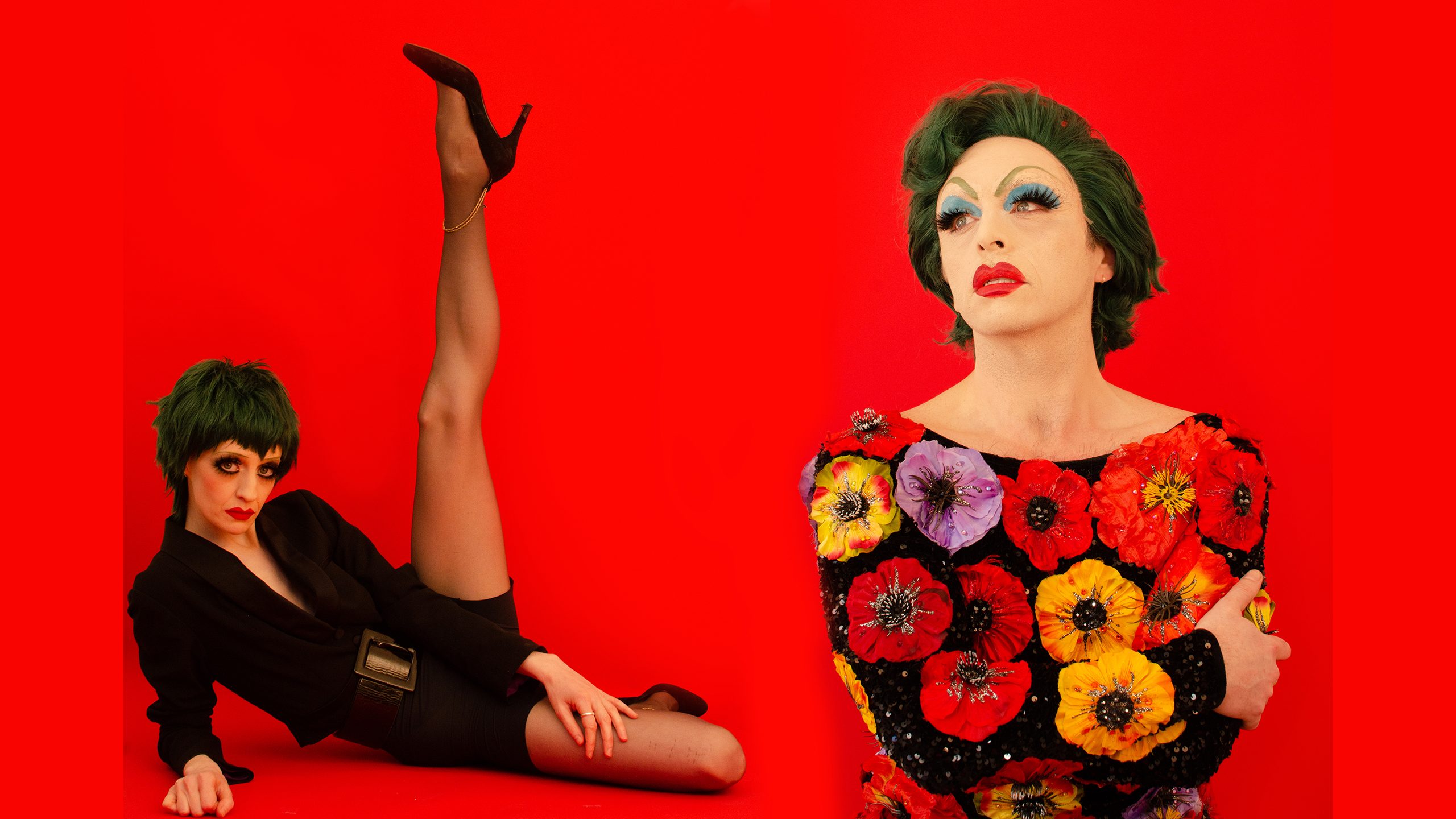
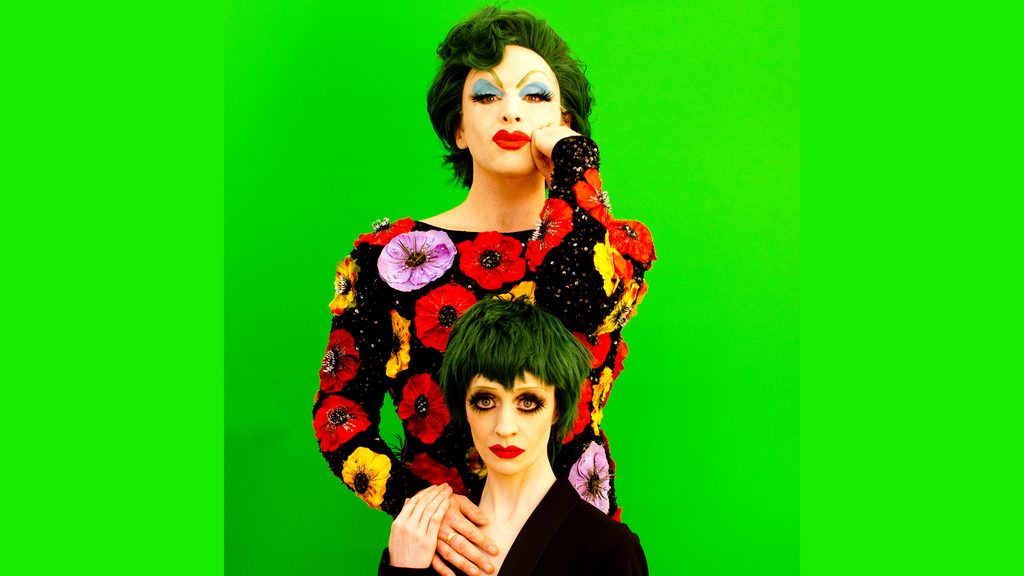
Image Credit: Image for Touch The Floor. Credit Anthea Lewis & Dawn Estefan.

Touch The Floor proposes something rather beautiful, that the dance floor can be an archive, with cultural history carried through bodies, music, moves, memories and stories. What are some of the dance floors, records or gatherings that live most vividly in your own personal archive?

I still have the faintest carpet burn scar on my calf from slipping down the stairs when I was little, trying to sneak back and watch the “big people” dance at one of our house parties, after I’d already been sent to bed at least twice.

A lot of my early memories of these gatherings are actually quite sensory. I remember what I was going to wear, what there would be to eat, and which other people my age might be there for me to play with.

My Auntie Elsie’s patties were the best. They were always far too hot with pepper for me, but I would still eat at least three if I could get my hands on them before they disappeared.

Those details are part of the archive too. It isn’t just about the dancing. It’s the food, the clothes, the music, the people, the anticipation, the conversations and all the things that happen around the edges.

One of the things that has stayed with me is experiencing gatherings where grief and celebration exist alongside each other. I remember being in a hall on a hot summer’s day, surrounded by friends and family after a loss. People had dressed sharply, but as the day went on, ties were loosened, hats were placed on tables and handkerchiefs were used to dab brows and cheeks. There were children running around, teenagers congregating in a corner, people talking and eating, and the inevitable moment when a child falls over and cries.

We had all experienced the sadness and pain of the loss, but the atmosphere wasn’t simply sombre. There was still life in the room. People were together. The DJ moved through tracks that were woven into our collective experience, soca, reggae, R&B, Rare Grooves, soul, jungle, dancehall and HipHop.

Then My Boy Lollipop came on, and two older women began to dance. Eyes turned towards them and a space was formed around them from the energy they emitted.

Watching them, it felt as though the music had opened a door to another time. They weren’t just dancing to a song, they were remembering other times they had danced to it, and in that moment they were sharing that memory with everyone else in the room.

That experience made me think about how gathering itself can hold memory. Even in moments of grief, people continue to eat, talk, dress up, laugh, listen to music and move together. Everyone is processing it differently, but sometimes the need to be together in it is the unifying factor.

For me, that’s part of what it means to think about the dance floor as an archive. Memory isn’t always preserved through formal documentation. It can be carried through a song, a gesture, a particular way of dancing, the food on a table, the clothes we wear, or the way people come together at significant moments in their lives. Those things can hold histories that aren’t necessarily written down, but they are remembered, embodied and passed on.

Image Credit: The Common Space. In collaboration with Natifah White, Dwayne Church Simms & Anthea Lewis. Sat 24 October 2026. Drop in between 1pm and 9pm at Rich Mix. Info → danceumbrella.co.uk

You trained formally in contemporary dance, but Touch The Floor gives serious cultural weight to the dancing that happens at house parties, blues dances, community centres and clubs. What can a social dance floor teach us that a studio, theatre or institution can’t?

You can see that transmission beginning very early. Babies are brought onto the dance floor in their parents’ arms, absorbing the music, the movement, the atmosphere and the way people respond to one another long before they are consciously thinking about learning to dance. Eventually they find their own way of moving, and in doing so they become part of that ongoing conversation.

What is interesting to me is that you don’t necessarily have to be a trained dancer to participate in this. You can contribute simply by being present. You can be dancing, watching, encouraging someone, responding to the music, talking to someone or simply absorbing the energy of the room. There are different ways of being part of what is happening.

That doesn’t mean that studios, theatres or institutions can’t create community, connection or shared experiences, they absolutely can. But social dance floors can offer a particular kind of accessibility and exchange because the relationship between performer and audience isn’t fixed. The people in the room are simultaneously witnessing, participating in and creating the experience.

The energy of the space is something that we collectively produce. Someone makes a move, someone responds, another person picks it up and changes it, and suddenly something is being communicated without anyone necessarily having to explain it.

That’s what a social dance floor can teach us, that culture isn’t only something that is presented to us or preserved somewhere for us to look at. It is something we actively create, experience and pass on together.

There is a kind of knowledge held in those spaces that lives in the body, in how we move, how we respond to one another, how we recognise a song, how we know when to join in, and how we make room for the next person. It is an ancient language, but it is constantly being renewed by the people who enter the room.

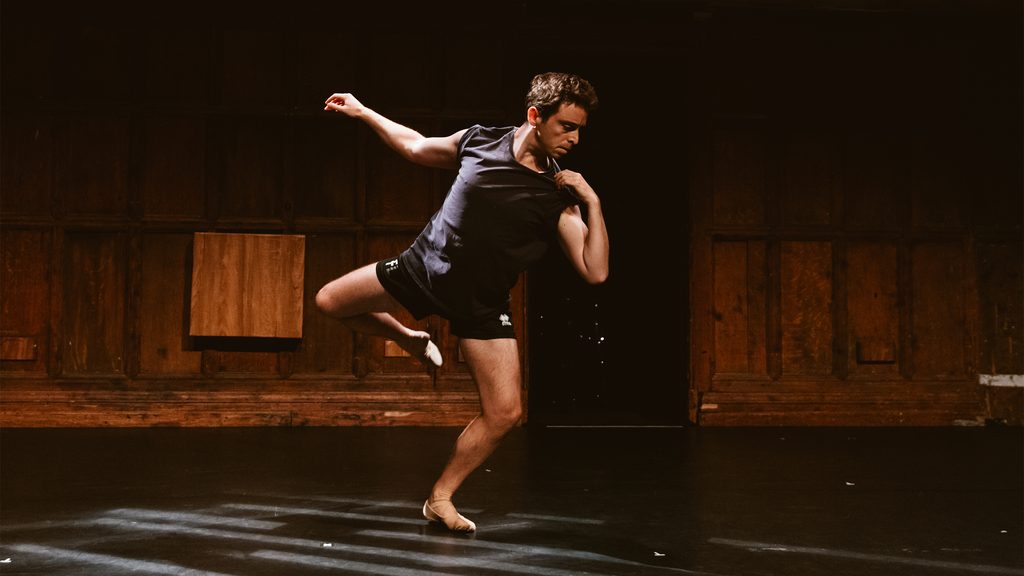
Image Credit: Mapping the Dance Floor. Zine making with Natifah White. Sat 24 October 2026. Drop in between 2pm and 4pm at Rich Mix. Info → danceumbrella.co.uk

You’re Dance Umbrella’s 2026 Guest Curator, bringing artists, DJs, academics and audiences together for Touch The Floor. Having spent much of your career asking whose voices get heard and who gets invited into cultural spaces, how does it feel to now hold some of that curatorial power yourself, and what have you wanted to do differently with it?

I think about cultural power slightly differently now. I wish we all understood that we hold cultural power ourselves, and that we don’t necessarily need to wait for the nod from an institution, an esteemed artist or someone we perceive to have greater authority before we recognise the value of what we carry and what we have to say. The challenge is believing in that power within ourselves first, before asking other people to recognise it.

Of course, the validation and reassurance that comes when someone says, “Yes, we believe in this, and we believe in you,” has real value. It can bring access, resources, finance, infrastructure and support. I don’t want to diminish that, because those things can make a huge difference to what becomes possible.

But getting to this stage has required a certain amount of grit. It has meant pushing back, calling things out, saying what I think is or isn’t happening, banging on some doors, walking away from others, sulking occasionally, advocating, listening, reasoning and wrestling with my own ideas. There has been frustration along the way too, but I think you need some of that. Sometimes it is the thing that keeps you questioning, keeps you pushing and stops you from simply accepting things as they are.

So having some curatorial power now feels less like, “I’ve finally been given permission,” and more like an opportunity to use something I’ve always had. I’m aware that the position gives me a certain level of access, resources and influence, and I want to be thoughtful about how I use that.

The people I’m bringing into Touch The Floor already have cultural power, knowledge and, in many cases, recognition. But that power isn’t only held by the people who are part of the programme. The audience and participants bring their own stories, memories, experiences and knowledge into the space, and that is part of what makes Touch The Floor relevant and meaningful.

What interests me is what can happen when all these different forms of knowledge, experience and influence come together, and how I can use my position to facilitate that exchange rather than trying to control it.

Image Credit: Sitting in Limbo. A conversation with Dwayne Church-Simms, Dr Aleema Gray and Stuart Thomas. Sat 24 October 2026, 3.30pm at Rich Mix. Info → danceumbrella.co.uk

Black History Month 2026 takes Honouring Our Communities as its theme. Touch The Floor feels particularly alive to that idea, celebrating pleasure, refuge, resistance and collective memory. Cultural spaces have always faced challenges, but new communities, scenes and places to gather continue to emerge. Where do you see that energy and renewal happening today, and what does genuinely honouring those communities mean to you?

Honouring our communities starts with recognising what is already there. Communities have always found ways to create spaces for themselves, to gather, to dance, to make music, to share knowledge, to find pleasure, resistance, refuge and each other. We don’t always need institutions to tell us that those things have value.

I see that energy in so many places, in clubs and parties, grassroots spaces, community centres, studios, new music scenes, online, and in the ways younger people are creating their own spaces and making their own culture.

And I think that’s also what honouring means. It’s not just looking backwards and saying, “Look what this community has given us.” It’s recognising that people are still creating, still resisting, still finding joy and still making history now. Genuinely honouring a community means listening and making space, but also being careful about what we mean by making space. Sometimes people in positions of power can think they are giving something to a community when actually the community has been doing the work all along. It’s about recognising the knowledge, creativity and cultural power that is already there.

I also think honouring means allowing communities to be complicated. To disagree. To change. To be messy. To have different generations and different opinions. We don’t have to package everything neatly for it to be worthy of recognition.

For me, it’s about recognising what is already happening, listening to the people who are making it happen, and asking what we can do to support it without trying to own it, define it or sanitise it.

After everything you’ve experienced across dance, theatre, producing and curation, what are you hungry for now, creatively and personally? Are there ideas, collaborations or future Blulili Projects already beginning to take shape, and what would you love the next chapter of Anthea Lewis’s life to contain?

I’m not sure I know what’s next, and I don’t feel a burning desire to know.
I’m quite invested in what is already happening with Touch The Floor, and interested in seeing where else we can take it, how we can deepen the enquiry and what might emerge from it.

I’m becoming more interested in the connections that happen around a project, the people you bring together, the conversations, and the things that weren’t necessarily planned. Those unintentional collaborations can be really interesting. You create a space for exchange and something can emerge that none of you could have anticipated.

That feels important to me with Blulili Projects too. I’m less interested in deciding what the next project has to be, and more interested in nurturing relationships, ideas and conversations and seeing what they might become.

On a personal level, I’m really enjoying the work I’m doing with the body through Pilates. At the same time, there’s a small whisper asking what my own body needs to feel connected, grounded and expressive. I’m interested in listening to that, and paying attention to what is calling me, even if it starts as something very small.

I’ve spent so much of my life in and through movement, and I’m curious about what my relationship with it might look like now. I don’t think that necessarily means I know what the next path is. There are multiple things that can exist at the same time, and perhaps I’m learning not to rush to decide what they mean.

I also want to create more space, more stillness, and more time to wrestle with things rather than always feeling I have to resolve them or turn them into something.

I’m not always comfortable with not knowing. Sometimes I find it really difficult, but I understand that it’s part of the process. The thinking, questioning, uncertainty and discomfort are as much a part of creativity as the doing, producing and making.

So perhaps what I’m hungry for now isn’t necessarily the next big thing. It’s having the space to pay attention to what is already unfolding, to deepen the work, listen to what is calling me, and allow things to emerge rather than forcing them into existence.

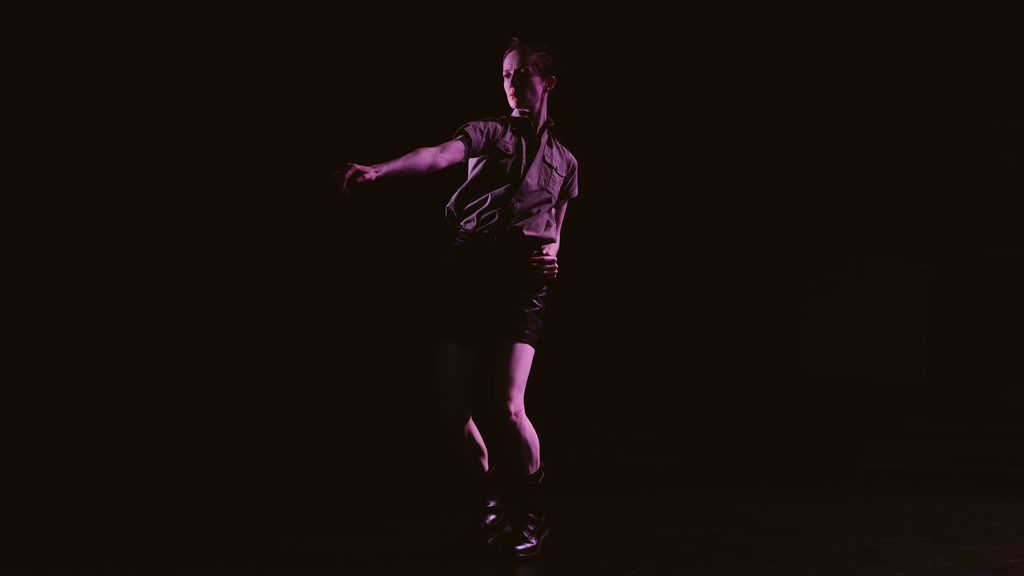
Image Credit: Memory in Motion. Featuring Lisa Anderson, Cyndi Handson, Spider J, Dean Bryce, Amarnah Ufuoma Cleopatra, Benji Reid, and Paradigmz. Sat 24 October 2026, 6pm – 11.30pm at Rich Mix. Info → danceumbrella.co.uk

Finally, which three London places would you send Run Riot readers to, a venue, club, gallery, cinema, pub, park, café, dance floor or something completely unexpected, and what makes each of them special to you?

Hollow Ponds, East London
Hollow Ponds is somewhere I’ve retreated to at different periods of my life. I’m drawn to being near water and being in nature, and I find those spaces really important for calming my nervous system. London can be incredibly stimulating and fast paced, and sometimes I just need somewhere where I can walk, sit, breathe and not have to do anything.

It’s not necessarily about having an activity or a destination. Sometimes the value is simply being able to disappear into a space for a while and let your thoughts settle.

Southbank Centre
Southbank Centre is somewhere I’ve been returning to since my teens. I’ve always liked the feeling of the place, it’s light, open and right by the river. There are so many things I want to see in London, but I can’t pretend the cost of theatre, exhibitions and performances isn’t a barrier. I’ve been invested in the arts sector for decades, and I still sometimes struggle to engage with it as an audience member.

So I really value big arts spaces like Southbank Centre and the Barbican, which have free elements and public spaces within them. You can go without necessarily having to buy a ticket. You can sit, wander, meet someone, have a coffee, look at something, think, or just be there.

I like spaces that make me feel invited to stay, where I don’t feel I have to constantly consume something or spend money to justify my presence. There’s something important about having cultural spaces where you can simply exist.

The spaces we make for ourselves
My third would be less about a specific place and more about the spaces we make for ourselves, places where we can gather, express ourselves and connect without everything being overly regulated or defined by someone else.

I’m increasingly grateful for the comfort of home. Some of the best nights are spent dancing in my kitchen with friends, playing songs from yesteryear that ignite a memory and singing loudly as we try to reclaim the moves our hips and knees no longer want to tolerate.

Ground Provisions came out of this idea. I started inviting people into my home as a way of bringing us together, with a minimal budget and everyone contributing towards the food. It didn’t need to be a big production or a formal cultural space, it was simply about creating the conditions for people to come together.

There’s something really valuable about creating these spaces for ourselves. You don’t necessarily need permission, particular infrastructure or even a formal cultural label. You can gather a few people, put some music on, cook something, talk, dance and remember.

That feels connected to a lot of what we’ve been talking about with Touch The Floor. Culture doesn’t only happen in designated cultural spaces, it happens wherever people come together and create the conditions to express, exchange and experience something collectively.

So I suppose the three recommendations are connected by something quite simple, I like spaces that allow me to be. Places where I can retreat, encounter something, connect, express myself, or just sit for a while without feeling I’ve outstayed my welcome.


Find Anthea Lewis at blulillibyanthealewis.com and on Insta @anthealewisblp

See Anthea’s work →

Touch The Floor
Part of Dance Umbrella 2026
Saturday 24 October
Rich Mix

Info and tickets → danceumbrella.co.uk

RUN RIOT IS SPONSORED BY The Coronet Theatre
The Coronet Theatre